
ZYN and nicotine pouch withdrawal: symptoms and timeline

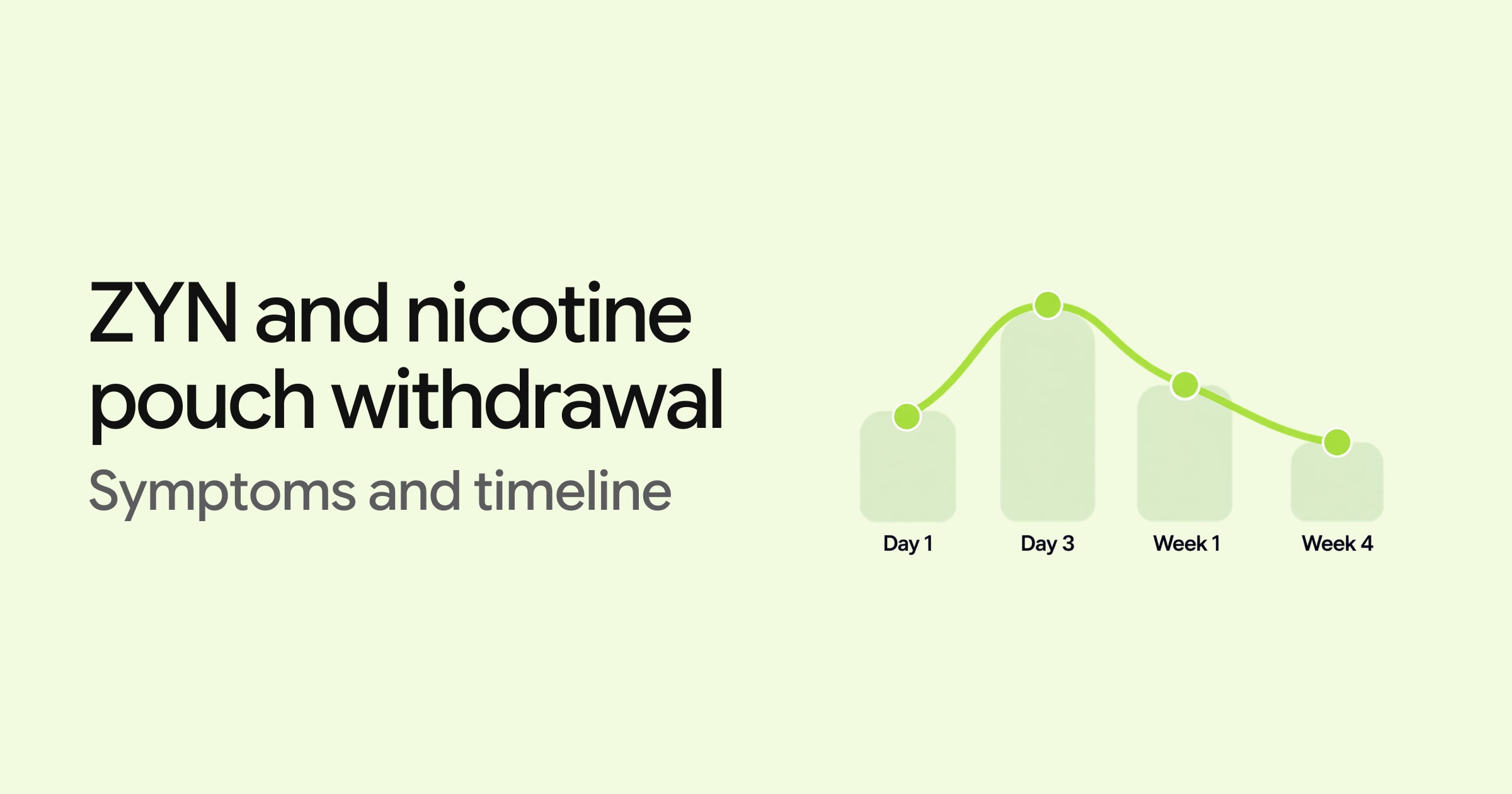
ZYN withdrawal usually starts within a day of your last pouch, is at its worst on days 2 and 3, and fades over three to four weeks. The same applies to pouches from any brand. Cravings and a bigger appetite tend to outlast everything else. The symptoms are unpleasant but not dangerous, and there's something that helps with each of them.
This article is about what nicotine pouch withdrawal feels like and how long each part lasts. If you're still deciding how to stop, start with how to quit ZYN nicotine pouches.
Why does quitting ZYN cause withdrawal?
Every ZYN pouch contains nicotine, and with daily use your brain adjusts to having it around most of the day. When the supply stops, it takes a few weeks to readjust, and withdrawal is what that adjustment feels like.
There is almost no research on nicotine pouch withdrawal specifically. What we know comes from decades of studies on people quitting cigarettes, summarized in a 2007 review by John Hughes. Pouches deliver the same drug, so the symptoms and their timing should be similar, but nobody has measured them in pouch users yet. Treat the timelines below as estimates.
ZYN withdrawal symptoms
The common symptoms are cravings, irritability, anxiety, low mood, trouble concentrating, poor sleep and a bigger appetite (Cleveland Clinic). Less common ones include headaches, nausea, dizziness, nightmares and constipation. Most people get several of these, and few get all of them.
Cravings
A craving is a strong urge for a pouch, usually set off by a moment you used to pair with one: the first coffee, the drive to work, the end of a meal. Each craving rises, peaks and passes within minutes whether or not you use a pouch. In the first days they come often; after a few weeks they mostly show up only at those old trigger moments. The practical side, from replacing the morning pouch to delaying for 10 minutes, is covered in how to deal with ZYN cravings.
Irritability and anger
Small things feel bigger than they are: a slow driver, a long meeting, a question asked twice. This is one of the most common symptoms and usually one of the first to fade. It helps to tell the people you live and work with that you're quitting, so a short answer doesn't turn into an argument, and to take a quick walk when you notice the fuse getting short.
Anxiety and restlessness
You may feel tense or jumpy, or unable to sit still. Many people used pouches to calm down, so it can seem like quitting has made them more anxious for good. Over the longer run it usually goes the other way: a 2014 BMJ review of 26 studies found that anxiety, depression and stress went down in people who quit smoking, compared with people who kept smoking. In the meantime, physical activity helps, even 10 minutes of fast walking, and so does cutting back on coffee for a while if it makes the jitteriness worse.
Low mood and depression
Feeling flat, sad or unmotivated in the first couple of weeks is a normal part of withdrawal. Plan small things you enjoy for those days and spend time with other people.
It isn't normal if low mood keeps getting worse after the first two weeks, stops you from functioning, or comes with thoughts of hurting yourself. If you have a history of depression, talk to a doctor before you quit. If you're having thoughts of self-harm, call or text 988 in the US, call Samaritans on 116 123 in the UK and Ireland, or contact your local emergency services.
Brain fog and trouble concentrating
You might read the same paragraph three times, lose your train of thought, or struggle with work that's normally easy. It can hit harder if a pouch was part of how you got into focus at work. It's usually worst in the first week. Put demanding work later if you can, break tasks into shorter blocks, and get outside between them.
Trouble sleeping
You might wake up during the night, sleep lightly or have vivid dreams. Keep your wake-up time the same every day, stop caffeine by early afternoon, and avoid alcohol, which makes sleep worse and is a common trigger to use again. If you used a pouch right before bed or kept one in overnight, expect the first few nights to be the hardest.
Increased appetite and weight gain
Food starts to taste better and you get hungry more often, partly because nicotine suppresses appetite and partly because snacks fill the gap the pouch left. This is the symptom that lasts longest. In a 2012 BMJ meta-analysis of 62 studies on quitting smoking, people gained an average of 4.7 kg (about 10 lb) in the first year, most of it in the first three months, and 16% lost weight. Keep easy, low-calorie snacks on hand for the moments you'd have used a pouch, such as carrots, sugar-free gum or fruit, and don't try a strict diet in the same weeks as quitting.
Headaches, dizziness, nausea and constipation
These are less common and less studied, and they usually settle within the first week or two. Drink more water, move more, and add fiber if you get constipated. If a headache is severe, sudden or different from your usual ones, see a doctor instead of putting it down to withdrawal.
ZYN withdrawal timeline: how long does it last?
ZYN withdrawal, like any nicotine pouch withdrawal, usually lasts three to four weeks. Symptoms start 4 to 24 hours after your last pouch, peak on days 2 and 3, and then ease off (Cleveland Clinic). Cravings and a bigger appetite last longest.
Hughes found that most symptoms peak in the first week and pass within two to four weeks, while craving and hunger take longer. Here's a rough estimate of how individual symptoms tend to play out:
| Symptom | Starts | Worst | Usually fades by |
|---|---|---|---|
| Cravings | Within hours | Days 1 to 3 | Mostly gone in weeks; return at triggers |
| Irritability and anger | Day 1 | First week | 2 to 4 weeks |
| Anxiety and restlessness | Day 1 | First week | 2 to 4 weeks |
| Low mood | Days 1 to 3 | First week | 2 to 4 weeks |
| Brain fog | Day 1 | First week | 2 to 4 weeks |
| Trouble sleeping | First night | First week | 2 to 4 weeks |
| Increased appetite | First days | First weeks | Can last several months |
| Headaches, dizziness, nausea | First days | First week | 1 to 2 weeks |
Estimates based on studies of people quitting cigarettes; individual timing varies.
If you tapered first, the final step is smaller, so the drop may feel less abrupt.
Why is ZYN withdrawal worse for some people?
The more nicotine you're used to, the harder the adjustment tends to be. Three things matter most:
- How much you use per day. Multiply the strength by the number of pouches. Ten 6 mg pouches is 60 mg on the label per day; five 3 mg pouches is 15 mg. The label isn't what your body absorbs, but it's a good way to compare yourself week to week.
- How soon you use after waking. The sooner you need a pouch after waking, the stronger the dependence tends to be. In studies of smokers, time to the first cigarette of the day predicted how hard quitting would be better than any other single measure (Baker et al., 2007).
- How long you've used. Years of daily use means the pouch is built into more of your routine.
If your daily total is high, cutting it down before your quit day spreads withdrawal out; see how to taper or quit cold turkey.
Can ZYN withdrawal make you sick?
For most people, ZYN withdrawal means a rough few days followed by a few uncomfortable weeks, and it doesn't need medical treatment. It can make you feel sick: nausea and headaches are on the list of symptoms, and a few bad nights plus irritability can feel a lot like coming down with something. None of it is a reason to go back to nicotine.
See a doctor if you notice something that doesn't fit the picture above:
- chest pain, a racing or irregular heartbeat, or shortness of breath
- low mood that keeps getting worse, or any thoughts of self-harm
- symptoms that aren't improving at all after four weeks
- a sore, patch or ulcer in your mouth that hasn't healed a few weeks after you stop
If cravings are the reason you keep relapsing, a doctor can talk you through medication. Our guide to getting extra help lists the free quitlines in the US and UK.
Is ZYN withdrawal worse than quitting cigarettes?
The withdrawal symptoms are largely the same, because the main drug is the same. The habit around it is different. A cigarette takes a few minutes and needs a break outside. ZYN recommends keeping a pouch in for up to 30 minutes, and it goes in anywhere: at your desk, in meetings, in bed. Heavy users can have one in for much of the day, so there are more moments that turn into triggers, and the mouth has its own habit of holding something.
Whether that makes nicotine pouch withdrawal harder than quitting cigarettes mostly depends on how much nicotine you used each day.
Frequently asked questions
What does ZYN withdrawal feel like?
For most people, the first few days feel like a mix of stress and bad sleep: strong urges for a pouch, a short temper, trouble focusing and restless nights, sometimes with a headache or low mood. It eases noticeably after the first week, and by weeks three to four most days feel normal again.
Can you quit ZYN without withdrawal?
Some people barely notice it, but most daily users get at least mild symptoms. You can make them much milder. Lowering your daily milligrams over a few weeks before your quit day means the last step is small. Nicotine replacement such as gum or patches can also take the edge off, though it keeps you on nicotine for a while longer.
Do 3 mg pouches cause withdrawal?
Yes. Lower strength means less nicotine per pouch, but dependence comes from the total you use and how often. Ten 3 mg pouches a day is still 30 mg on the label, and you'll feel it when you stop.
How long do ZYN cravings last?
The frequent, strong cravings usually ease after the first one to two weeks. After a month, most people get cravings only at specific triggers, such as a drink with friends or a stressful day, and they're shorter and easier to ignore. Occasional urges can turn up months later; they pass the same way.
Can withdrawal come back after a month?
The physical symptoms don't come back once they've gone. What can come back is a sudden craving in a situation you haven't been in since quitting, like your first holiday or first long drive without a pouch. That's a trigger: withdrawal itself is over by then, and the urge fades quickly.
Why do I feel tired after quitting ZYN?
Nicotine is a stimulant, and poor sleep in the first weeks adds to it. Tiredness usually lifts as sleep settles over two to four weeks. If you're still exhausted after a month, check with a doctor for other causes.
Sources
- Aubin HJ, et al. Weight gain in smokers after quitting cigarettes: meta-analysis. BMJ, 2012.
- Baker TB, et al. Time to first cigarette in the morning as an index of ability to quit smoking: implications for nicotine dependence. Nicotine & Tobacco Research, 2007.
- Cleveland Clinic. Nicotine withdrawal.
- Hughes JR. Effects of abstinence from tobacco: valid symptoms and time course. Nicotine & Tobacco Research, 2007.
- Taylor G, et al. Change in mental health after smoking cessation: systematic review and meta-analysis. BMJ, 2014.
- ZYN. How long do nicotine pouches last?